
 Towards the middle of my sophomore year, I began losing my love and need for writing. I had exhausted the typical topics I was used to writing about, written about so many things I needed to write about, and worked out so much of my internal conflicts that I was… happy. So happy I was another cliché. Being in this satisfied place, I didn’t know what was next for me so I kind of just avoided that topic altogether, for a while at least. I figured it would go away, but, of course, it did not. I still had the rest of my life ahead of me, much less the rest of the school year and there were assignments due. While I was in this stuck place, lacking addiction I once had to writing, I wrote so many awful things about being happy. That’s when I began to think, “I don’t know if I can do this anymore. I don’t know if I am capable.” It wasn’t until I wrote a poem about new-found love, ironically the least cliché thing I’d written in so long, that I regained the knowledge that I am a writer.
I still did not feel like my normal, writer self, but after a talk with one of my beloved fellow writers and mentors, I made the decision to take the summer to stop, breathe, and stimulate my mind in other ways I had not; I needed the time to recharge and rediscover myself. I needed to stop over-thinking. I spent the time trying new restaurants, going to art museums, and going on long, hot hikes through nature. I did not read or write until one night I pulled out “If Only You People Could Follow Directions” By Jessica Hendry Nelson to loan to a friend. I decided to reread parts of it and sobbed in my bed for hours. Every emotion I had ever felt in my whole life came rushing back into my body and I thought about the first time I had ever read anything written by her. In the midst of self-discovery and freshman year the essay “Rapture of the Deep” was an in-class read. After that, it was like the marrow that had been sucked out of my bones was put back; I knew I was a writer.
It was inside of me and there was no going back; I could never not be a writer.
When I read Nelson again over the summer, it rekindled the sort of hunger we, as artist, feel in the bottom our chests to create, but also explore humanity. We are very curious human beings; we want to know. I want to know. Through my journey this far, I’ve come to realize that I can write about my situations or the things I am still struggling with in a way that is not sad or happy, but simply thoughtful. Writing does not amount to happy or sad; it amounts to the meaning of life or, what meaning you give your life.
–Lex Hamilton, Co-Marketing/Social Media Editor
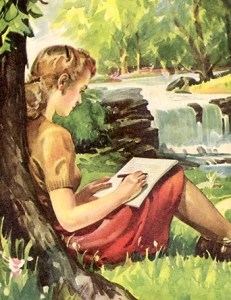 I’ve lived in the same house since I was six years old. As I was growing up and beginning to write, I was discovering the world at the same time, often through the same outlet. I’d find myself walking around my backyard, which is an acre of woodsy land, looking for inspiration. One day I came across a tree I hadn’t seen before; it was huge, with the perfect dip in the grass at the base of the trunk for me to lay a blanket down and stretch across with a notebook. That spot quickly became a safe haven for me, where I would escape to journal about my day or write to distract my mind.
 I write poetry to tell little stories. As someone who prefers fiction, I use my poems to explore the emotions I can’t access through prose. I find that poetry allows me to be more vulnerable—it’s more effective to infuse and explore personal bits of me without having to worry too much about character development and plot.
 elanlitmag.org