
 I remember at any social event; my mother would tell everyone I had my own imaginary friend. This made me feel stupid of course, shy even to get to know people. At such a young age I created a bubble, separating the outside world from my own imaginations and desires. My mother thought my imaginary friend was something I could see and hold on to. I never considered this imaginative being a physical entity or a way to escape my social encounters. It never had a name either. I communicated with my imaginary friend in the form of little sentences in a glittery journal I got for Christmas because I was too nervous to speak. Always confused with Spanish and English language, I was scared to mess up in front of my friends. I didn’t want them making fun of me for not knowing English. I spent up until fourth grade with speech difficulties and I resorted to writing my conversations down to pass my classes. I fell in love with writing as a form of communication first and then it just disappeared.
At the end of my childhood and especially during late stages of my preteen years, I was mad at writing. In the sense that I was betrayed, writing left me for a while. Like an old friend, writing just moved on from me and it left me feeling extremely bitter. My family was going through financial difficulties and I was still confused about my growing body. I’d thought about what I wanted to say when writing came back. “Hey um, you pretty much left me at my lowest point in life. Thanks, I hate you”. At that age, I told myself that writing left me, like it was something it could ever leave. I was defensive. I left writing.
After my trip to Colombia for a summer, I had recurring night terrors of not being able to speak. One morning I woke up to a dream that a man from Bogota removed my eyes as I was walking down the street. My experience in a third world country made me realize my fortune in the United States. The hot water, the air conditioning, the equality. I never realized how free I actually was. My dreams of Colombia’s brutality pushed me to write until the sun rose, and if I was tired, I slept in a closet where no one could see me. Instead of being afraid to speak, I was afraid to step outside. I wrote long poems, poems that had two lines, and poems that tasted like hot dogs they sold after church. I wrote when I told my grandmother I hated her in front of a mountain that stretched all the way to Venezuela. Sometimes I painted with my neighbors when there wasn’t any money for paper.
It was the strangest feeling when my old friend came back. We were both familiar with each other and it was almost like we picked up right where we left off. I was still bitter at my old friend but I never stopped coming back for more. Today I realized that I am addicted to writing, addicted to communicating how I feel on paper. The only way I got over my fear of speaking was to write about being afraid.
–Evelyn Alfonso, Poetry Editor
Tag: Craft
A Loss for Words
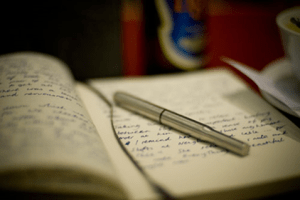 I don’t think there has been a very specific moment in my life where I’ve lost my love for writing. I believe I’ve had a number of little moments where I felt like giving up on writing for many reasons; whether I was stuck in a piece or couldn’t get a piece started at all, or I was just disappointed in what I wrote, that it didn’t feel like I’d taken the writing to its full potential. I could never imagine myself totally giving up on writing. I can’t help but write every day, not just because of classes and assignments, but also because my need to put down the things I see. I observe my surroundings and in them, I find characters, plot and conflict, abstract ideas. These things I put down, mentally at the time, then later on paper. Truthfully, I don’t immediately put these ideas to the test in a piece. I write fragments and leave them as is.
Although jotting down ideas is a part of being a writer, it is nowhere near the full scope of writing. At the beginning of each school year is when I, in a way, reboot myself as a writer. During the summer, I never find time to write pieces and hardly find time to read. It’s not necessarily that I lose my love for writing, it’s just that I lose some of my abilities. I become unfamiliar when I’m away from it for too long. I attribute my ability to rekindle my love for writing to my teachers and peers. Again, I regain it at the beginning of school. Assignments in creative writing can be very stressful because they require a lot, mentally and emotionally. Being in the class environment with people who have the same love for writing as I do and knowing that they understand is encouraging. It’s a reminder that I’m not alone and that it’s not just a grade, it’s practice within my craft. I’m forced to clean off the rust of not having written anything for two and a half months.
Another way I rekindle my love for writing is reading other people’s work. It’s another way of understanding that I’m not the only one on a journey to knowing myself, things instilled in me and around me, things I know too well and don’t know at all.
–Lindsay Yarn, Digital Media Editor
Elusive Poetry
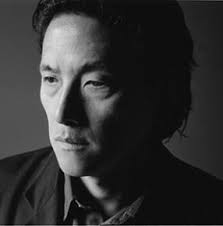 Poetry seems to be a sort of elusive creature to a lot of people. When people read poetry it seems to slip right past them, the words on the page cluttering together and then becoming a smaller and smaller dot on the page until they are almost nothing, the meaning gone with the readers want to find meaning, and writing it can be very much the same way. You don’t know what you are writing until it is out there on the page and even then, you find yourself wondering “what even is this?” or “am I okay?”
But, in the words of poet Li-Young Lee “a poem is like a score for the human voice.” Poetry may be elusive, and will confound us at times, but it cannot be denied that when truly and thoroughly read poetry is a universal language in which all our souls connect and speak in. Thoroughly written, it becomes a language for us to explore our own selves, and by extent, other people as well. Therefore when posed with the question of what inspires my poetry, I have to say that I think that everything inspires my poetry, even things that I don’t know inspire it.
If you were to ask me two years ago what I thought about poetry, and what inspired me I couldn’t have given you an answer. That is because poetry was still an elusive beast to me, and I had yet to unlock the deep emotional connection with my writing that it takes to write it. I only began to write poetry, and get inspiration for it, when I realized that there was something deep within myself that begged to be explored and heard. A voice that could not be let out in my everyday life. A score that I needed to write, for my voice, and for the voices of people who have lived through similar experiences and don’t have the privilege (and curse) of knowing how to write about it.
I am inspired every day, by the things I feel, and the things I see that make me feel. If an experience is strong enough to make me cry, or laugh, or be angry I know that it is worth writing about. I am inspired by the words of poets like Li-Young Lee whose craft and mastery of words seems otherworldly to me, being able to string together the perfect line that makes even the people who don’t want to read poetry stop and think for even just a moment.
Poetry is an elusive animal, one that I don’t think even the most skilled poets have learned to tame. It is an animal that resides inside every one, a voice that is waiting to be unlocked, a voice spoken through the inspiration of every humans common experiences and connections.
–Zac Carter, Co-Art Editor
 elanlitmag.org