On What’s to Come

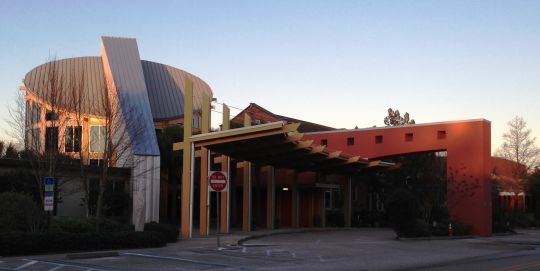
1392390538DouglasAndersonThe first semester of my senior year has just finished. I will never have another first day of high school, I will never be scared of my school’s mascot -a hideous puffin- at orientation, or be forced to take another Douglas Anderson-style mid-term again. I will also never have another poetry class with Mrs. Melanson, never hear “So, my children…” with a flourish of her hand as she explains just how synesthesia reflects on life as a whole. It’s bittersweet.

I’ve just started Senior Fiction, it is day three and I’m already waiting to see my prose grow the way my poetry did in the semester prior. Writing story starts, reading flash fiction- it feels weird. So far, what I’ve realized is that the most interesting part to every beginning, is the ending it leaves behind.

I first realized just how true this was when I began “Casual Vacancy,” by J.K. Rowling. The story starts when a man dies, and the entire town learns about his death. They feel things about it, their lives are changed by it and new things happen to them through it. The end of a man’s life became the beginning for so many other things. After this realization, I started thinking about other stories I’d read, other myths and parables I’d been taught. Adam and Eve begin life on Earth after their lives as angels end; monarchies are squished to bring forth republics, if Hester Prynne is going to raise her child, her good reputation and even her infatuation with the baby’s father has to be over. Sometimes good endings lead to bad beginnings, and sometimes it takes a little tragedy to bring the dawn in.

I’ve often thought about being a history teacher after school, and with that idea in mind, it’s really hard for me to “leave the past in the past.” We, of course, shouldn’t hold onto the past, we should grow from where we’ve come. But at the same time, as we start a new year, a new semester or job or relationship or short story, I think it’s important to reflect on where we -or the character’s we’re writing about- have come from. It’s important to know how all of the things that are constantly ending, relate with what’s to come.

-Savannah Thanscheidt, Web Editor  
On Writing Beginnings

window-flower-plant-notebook-diary-notepad-pen-reflection-light-dayAs a writer, a new year can mean finally writing that idea that has been swirling around in your head for a while or taking a closer look at the conventions you put into your pieces. Since January is the first month of the year, why not start working at the beginning on beginnings?

The beginning of a story or a poem needs to hook the reader- but not like the hooks taught in elementary school English class. How you start a piece conveys everything about where the piece will or can go. In my work, I strive to make my openings memorable, and looking at what other writers have started with can be the most helpful thing. In Water for Elephants by Sara Gruen the prologue opens with the image of three people standing under a greasy awning. This image sets the tone for the lifestyle and events that are to come for the main character. It is probably one of the most common ways I and other writers start but it’s a strikingly simple mix of images. But some stories call for a more drastic opening. Albert Camus opens his novel the Stranger with the simple sentence “Maman died today.” This immediately grabs the readers’ attention. Who doesn’t want to suck a reader in with only three words? Sometimes the beginning of a piece of writing makes you stop and process a new outlook. My favorite poet, Jack Gilbert, starts his poem Falling and Flying with the line “Everyone forgets that Icarus also flew.” It makes you look at the age old story of Icarus in a new light and before shipping you off into his insightful poem.

With 2015 just beginning, why not stop and think about the beginning and maybe even put a more interesting spin to it.

-Chrissy Thelemann, Submissions Editor 

A Tradition of Thanks

Blog Post Tradition PicThis past June I made my way across the Atlantic to visit one of the Seven Wonders of the World, The Coliseum. While waiting for my ticket to be purchased to get inside, I made my way to the many vendors set up with various tchotchkes, postcards, and more. A man with a cardboard box hung around his neck approached me and tried to get me to purchase one of his knock- off Rolexes. I told him over and over “No, thank you” but he just couldn’t take that for an answer. Since he hounded me with so many offers, I decided ask him where he was from. He told me that he and many of the other vendors were from Somalia. I then asked him why he was here in Italy, he nonchalantly replied with one word, “Money.”

“I need a passport and she needs school: to read.” he said. The man then proceeded to point to a little girl behind him who looked to be about three years old. This was all they had, just a worn out lawn chair, a box of fake Rolexes and what little hope they had left.

Thinking about the life I had left for two weeks back at home made me realize how good I had it. My father wasn’t trying to make ends meet by selling watches outside the Coliseum gates. And I knew how to read. I had never been thankful for being able to read. Now with the holidays around the corner, families coming into town, I cannot think of a better tradition to end the holiday season with; being thankful. My friends, my school that has allowed my love for writing to be nurtured, my home, a country where I can speak freely, my mother, my father, everything. Every opportunity that has been put at my feet even if it ended in failure. Everything.

And after that trip I began writing in a journal one good thing that happened to me each day- which I still do. Whether it is passing my math test, waking up on time, or learning something new, I know I have something to be thankful for every day. So as I close out this year and ring in the new one I hope that this tradition will continue to open my eyes and allow me to take in so much more of this world.

-Madison George, Social Media Editor