
 Poetry seems to be a sort of elusive creature to a lot of people. When people read poetry it seems to slip right past them, the words on the page cluttering together and then becoming a smaller and smaller dot on the page until they are almost nothing, the meaning gone with the readers want to find meaning, and writing it can be very much the same way. You don’t know what you are writing until it is out there on the page and even then, you find yourself wondering “what even is this?” or “am I okay?”
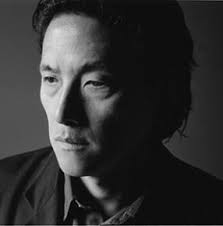
But, in the words of poet Li-Young Lee “a poem is like a score for the human voice.” Poetry may be elusive, and will confound us at times, but it cannot be denied that when truly and thoroughly read poetry is a universal language in which all our souls connect and speak in. Thoroughly written, it becomes a language for us to explore our own selves, and by extent, other people as well. Therefore when posed with the question of what inspires my poetry, I have to say that I think that everything inspires my poetry, even things that I don’t know inspire it.
If you were to ask me two years ago what I thought about poetry, and what inspired me I couldn’t have given you an answer. That is because poetry was still an elusive beast to me, and I had yet to unlock the deep emotional connection with my writing that it takes to write it. I only began to write poetry, and get inspiration for it, when I realized that there was something deep within myself that begged to be explored and heard. A voice that could not be let out in my everyday life. A score that I needed to write, for my voice, and for the voices of people who have lived through similar experiences and don’t have the privilege (and curse) of knowing how to write about it.
I am inspired every day, by the things I feel, and the things I see that make me feel. If an experience is strong enough to make me cry, or laugh, or be angry I know that it is worth writing about. I am inspired by the words of poets like Li-Young Lee whose craft and mastery of words seems otherworldly to me, being able to string together the perfect line that makes even the people who don’t want to read poetry stop and think for even just a moment.
Poetry is an elusive animal, one that I don’t think even the most skilled poets have learned to tame. It is an animal that resides inside every one, a voice that is waiting to be unlocked, a voice spoken through the inspiration of every humans common experiences and connections.
–Zac Carter, Co-Art Editor
 Lately, all of my poetry has depended on prompts and lessons given in class. I think it’s good for a poet or just a writer to get their poetry from a classroom structure, but I also think too much structure can lead to less creativity. I’m guilty of not often taking time out of my personal day to write anything. But when I do find the time, I go to the bookshelf for inspiration. I only own a few poetry books. The one I go to most often is by Nikki Giovanni: “Black Feeling Black Talk Black Judgment.” What I find inspiring in this collection of poems is the speakers that Giovanni brings to light. They are some of the most unapologetic, emotionally vulnerable speakers I’ve ever seen in poetry. It’s something I think Giovanni has mastered in her poetry and I seek to create in my poetry as well.
 In most conversations about what makes a poem a poem, form is discussed. One of the seemingly defining factors of a poem is its line breaks. Whether it be sprawling free verse, or the strict nature of a sestina, a key identifying factor of poetry is its visual appearance. Line breaks are a key poetic tool to manipulate mood and to segment images—they are, in many ways, one of the few things poetry has no other genre does.
 elanlitmag.org