
 I have always greatly enjoyed implementing effective sensory details into my poems, even though it has proven to be a pretty great challenge for me. I’ve found that if I don’t pay attention to what I’m doing, or if I get too wrapped up in the intent of the piece, I’ll completely leave out the details needed to actually show the story. Over the years I’ve gotten better about balancing my focus between images and other aspects of the poem, but still find myself with poems that lack the different details that would make it so much more powerful.
I think that because I’ve had to be more cautious about the attention I pay to detail in my poems, I’ve learned to really appreciate it when I can create a powerful image. I also have a pretty deep admiration for poets who are able to write wonderful images without even paying too much attention to the sensory details they’re using; it’s just second nature to them.
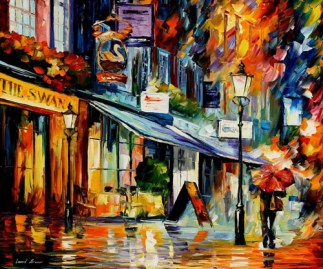
One poem I read a few years ago, Preludes by T.S. Eliot, has always stood out to me, as it’s compiled of so many beautiful and abstract images that really put the reader in the moment. In the second section, the lines “The morning comes to consciousness, Of faint stale smells of beer, From the sawdust-trampled street, With all its muddy feet that press, To early coffee-stands,” are so brilliant. Eliot obviously pays special attention to the close details of the poem, inviting the reader to smell the thick, smoky air, and walk along the streets as he says they are. You get to go into the homes and lay on the bed, feeling everything the writer describes. The images have a great impact on giving the intent to the reader that they work well for the poem.
Whenever I find myself having trouble with my writing, I like to read over this poem, if not for inspiration then just to appreciate the writing. Most times, however, reading it gives me encouragement to work on my images and strengthen them, or gives me specific ideas for how to use sensory details for the betterment of my poetry. I’ve definitely noticed that the longer I take on a poem, the better outcome I’m going to come up with, but that pretty much goes for anything. I would like to think that as I’ve recognized this fault of mine I’ve been able to gather experience and allow myself to grow and learn more about sensory details, and how to successfully use them in my writing. Not only have I learned more about powerful sensory choice from reading other poetry, but I’ve also learned about them from classes and workshops, receiving feedback to help further images for the experience of the reader. While I may be learning to make my sensory details and images stronger in my poems, I’m also making the intention of the piece clearer and improving the experience of reading the poem as a whole.
–Makinley Dozier, Co-Web Editor
 I have a thing for deeply flawed voices in stories. Those characters who immediately rope you into a new way of seeing the world. Use of diction and sentence structure is crucial to sending the reader straight into a character’s head. There are many great examples, but no one author has influenced my way of composing sentences like George Saunders.
 In the first half of my junior year in Creative Writing, I quickly cultivated the most intimate and intense relationship with poetry I’d had thus far. I became exposed to an enormous amount of poetry and poetic techniques that, through practice, I could eventually use meaningfully in my own work. After closely studying the choices of established poets in their writing, with each piece I felt a sense of enlightenment and awe, as if every new technique I hadn’t previously known existed was a key unlocking a door, and another door, and another.
  elanlitmag.org