
 I write poetry to tell little stories. As someone who prefers fiction, I use my poems to explore the emotions I can’t access through prose. I find that poetry allows me to be more vulnerable—it’s more effective to infuse and explore personal bits of me without having to worry too much about character development and plot.
My favorite part of poetry is imagery. I love describing objects and people. It’s fun to find adjectives and verbs to convey how both readers and I should feel about something. Imagery has so many effective, interesting aspects. In my case, diction, syntax, and images go hand-in-hand. It’s quite an effort—and one that’s worth it—to find the right words that not only creates the right emotional images, but also the sound and feel. For example, I once wrote a poem about a dying light bulb. Instead of saying “dim light shines on me,” I took the time to revise several times until I found a satisfactory line: “Light spills/across skin, fumbles/silent/and cool.” This line expresses the isolation of both the speaker and the bulb, which itself is a metaphor for watching someone die without an emotional connection.
The aspect of figurative language also plays in my quest for great, emotionally-raw images. I’ve mentioned metaphors already, but similes are just as important. I once wrote a poem talking about a hangnail, and what I compared it to really drew some reactions from people (which is what I wanted): “The last time my index fingernail snagged/on a thread and ripped into/pale-pink pricking muscle,/I cried out—/watched clear shell split easy/like Tupperware left in the sun.”
There’s also something I got a lesson on this year, but found that I’ve attempted it many, many times before—synesthesia. Most people use their five senses (sight, touch, taste, smell, hearing,) to process objects. Synesthesia takes that reliance and plays on it with adjectives and verbs that deliberately contrast a specific sense—while still using that sense—to create a lasting emotional impact. For example, if someone ate a cherry that was fresh, but maybe reminded him of a broken relationship, it could be described as having “…velveted skin/peeling crunchy, sweet-tart sparks/pricking his tongue.”
I guess my love for images comes from my love for grotesqueness. I love piling images on images to describe things in great detail, which I credit to one of my favorite authors, Ray Bradbury. But enough about fiction for now. I was first introduced to poetry in elementary school, when we covered classic American poets like Emily Dickinson and Robert Frost. The first poems I heard/read were Dickinson’s “I’m Nobody! Who are you?” and Frost’s “The Road Not Taken.” I remember being taken aback at the frankness of these poems, and how they described things so simply yet beautiful. I still read their poetry now, although I can say that I’ve found many, many more poets that inspire me to keep going.
–Seth Gozar, Co-Fiction Editor
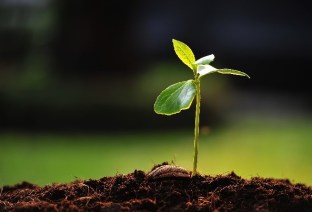 I’m always writing about soil, and water, and trees, and places that revolve around these things. I never intend on the first go round with a first draft of prose or a poem to add those things, but it always seems to happen. One of my favorite poems I’ve written, is in which feminine perspective in regards to the loss of societal control over one’s body is shared. The voice that houses this perspective is encased in lotus flowers, as I offer up another version of the section of Homer’s Odyssey, where Odysseus comes across the island of the lotus eaters.
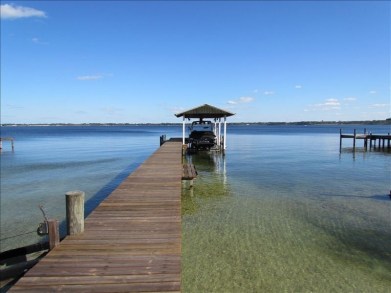 I was outside a lot as a kid; my dad took me to the woods, my grandma took me to the swamp, and I took up the habit of reading outside, beneath the adolescent peach trees we planted before moving from South Carolina. Not only did being outdoors afford me a wicked tan, but my contact with nature throughout my childhood has given me a foundation of ideas to spout from in my writing.
 elanlitmag.org