
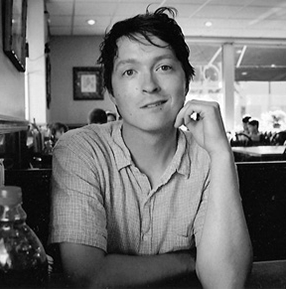
 At the start of my freshman year of high school, I did not know how to write. I knew that I wanted to write, and I knew that I had a lot to say, but I hadn’t quite figured out how to articulate any of it. The poem that changed all of that for me was “Killing Flies” by Michael Dickman. I stumbled upon it by chance, and I was immediately captivated. The opening lines grabbed me and pulled me into a situation that I had never come close to experiencing, but that I somehow felt incredibly connected to
“I sit down for dinner
with my dead brother
again
This is the last dream I ever want to have
Passing the forks
around the table, passing
the knives
There’s nothing to worry about”
– Killing Flies
These lines stunned me, and expertly conveyed grief in just a few words. This poem came at an important time for me, and showed me the way that words can affect people in a way that can’t always be explained. During freshman year, I experienced the loss of purpose that comes with being 15. I was writing all the time for school, but I didn’t really know why. I didn’t feel like I was doing anything important. After reading this poem, I understood why.
As much as I love Dickman’s craft, I can’t say that is specifically what draws me to his work. Rather, it’s the unexplainable feeling I get each time I read one of his pieces.
The most valuable advice I was ever given as a writer was that specificity is your friend. In a lot of my early writing, I was trying to be as general as possible. I wanted to write what I thought people wanted to read, and I tried to be relatable to everyone. I was a 15 year old girl pretending like I lived in New York City, or played guitar in a band, or was struggling through college. In Michael Dickman’s poems, nothing is ever general. The detail is astounding, whether he is talking about his deceased brother, his relationship with his father, or Emily Dickinson.
“You eat the forks,
all the knives, asleep and waiting
on the white tables
What do you love?
I love the way our teeth stay long after we’re gone, hanging on
despite worms or fire
I love our stomachs
turning over
the earth”
– My Autopsy
These lines strike me in ways I can’t explain, but the feeling I get when I read his work resonates through me. In a way, this feeling is what I am searching for in what I read, and what I am striving to produce in what I write. Michael Dickman taught me how to speak, how to be honest about the things that it hurts to be honest about. Now, I know that I can find myself, and by extension my writing, inside his poetry.
– Meredith Abdelnour, Junior Layout and Design Editor
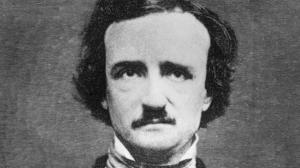 As a young writer, though I didn’t realize it at the time, I was completely enamored and thus shaped by the works of Edgar Allan Poe. I took on a full understanding of a poem for the first time through his poem, “Alone”. I chose to interpret this poem for a speech class I had freshman year and, from the seemingly random personal connection I stumbled upon, I felt less fearful of my own emotions I deemed irrelevant or too difficult to understand. From there, I bought a full collection of his work and even wrote several pieces in his characteristically dark and dramatic manner. I believe Poe to be the reason I was able to convert my understanding of poetry from the need to rhyme to the need to express emotion that is so honest it reflects the overall human condition and allows solace in such.
 Billy Collins has always been on of my biggest inspirations as a poet. I discovered in my freshman year of highschool and at first I didn’t really like him. Actually, I didn’t really like any poets but I remember one Christmas morning my grandpa handed me a small stack of poetry books. He told me he knew I was having trouble with my poetry and he saw these at a garage sale for a few dollars and thought they might help. Stuck in between Robert Hass and Yeats was a book by Collins. I think the cover attracted me more than the actual poetry did.
 elanlitmag.org