
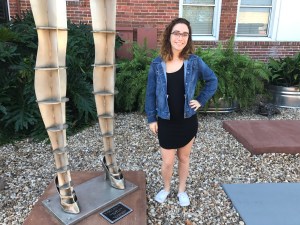
 As a senior who hadn’t been on the staff in the past, I had no idea what to expect going in. I had friends on the staff in the past and knew about blind readings and all that stuff that goes with literary magazines but I had no idea what I could contribute to Elan. I always thought to myself- what was my role?
Once I got assigned art editor I knew it was the perfect role for me. Everything I had always done in my writing time had been centered around art. I loved seeing weird, abstract things and shaping them into a disgusting, gruesome poem. Or seeing something so beautiful and big that it encouraged me to share whatever story I had myself. Art has been my biggest inspiration for my work because of the complexities and the way people bend the rules to art so frequently. Because of this, my time as an art editor has been greatly enhanced. I loved seeing submissions come in that were so beautiful and eye-catching but also carried such deep meaning, whether it be in context with a writing piece or not. The thing about Elan art is that all the pieces stand out on their own and almost don’t need explanation.
As a writer, my own work, as I said, had already been greatly influenced by art. Elan gave me that accessibility into a world I never even knew about. We managed events that involved heavy discussion with art liaisons where we learned about their world and ours. I learned so much individually about how art is managed and all the requirements they have to meet and their creative thought process as well. It was incredibly inspiring to see kids working on the Coffeehouse mural, for example, and see how they took a small sketch and turned it into this big, beautiful mural despite everyday life struggles and only a two week deadline. It helped make me crack down on my writing and push through during the hard times.
As a student, Elan has taught me many things that I definitely could take with me into the future. It’s really taught me about the value of team work and doing things on time. Elan was probably one of the only classes I would try and be as on time with assignments as possible. I knew if I didn’t get something in on time that I was jeopardizing other people’s roles and responsibilities and making the book process slower. Nothing was ever rushed but it was important to have the respect for one another to get things on time.
It also taught me that hard work pays off. During my year on the staff, I have seen beautiful events take place from homecoming to Yellowhouse that have really blown me away. Walking through Yellowhouse and seeing all the art and writing that everyone put together and laid out into a physical book was pretty jaw dropping. Not to mention everything that was student led and put together. Elan teaches you that even when you’re working hard you know you’re going to see a beautiful end result.
– Natalie Filaroski, Senior Art Editor
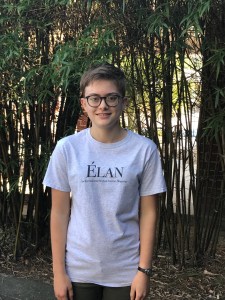 It’s strange to be writing my final blog post for this staff. Since I started them as a junior, being a part of Elan Literary Magazine has taught me an unbelievable amount about what it means to be a writer, a leader, even to be an independent person – lessons I’ll keep with me in my next stage of life, in college. Being part of Elan has been a part of my growing up. I stepped onto the staff not sure what my role was going to be, pretty doubtful it would include something so full of responsibility and challenges. However, listening to the senior staff members at the time caught my attention. I wanted to find something new, something that would test me in new ways. High school was, I’m sad to say, getting a bit boring. I was tired of moving from class to class, only picking up the information I needed for the next round of testing, before moving on to something else. I wanted to learn what it would be like to dedicate my time and energy entirely to a single goal, and watch it pay off to something much larger than a test.
 The clean lines of her newest, most popular poetry book were so soft in the palms of my hands that it almost felt like a crime when I stained it with my black ballpoint pen. Every word was so meaningful to me that I book marked several poems with big blocks around a whole stanza, or sometimes a whole poem would be sectioned. There are dozens of little brightly colored Post Its hanging on to the edge of pages, like bookmarks for me to find my most favorite lines or poems without having to bend the neat pages back.
 elanlitmag.org