
 Unlike many of my peers in the Creative Writing department, I have only been at Douglas Anderson for two years. Also unlike many of my peers, I didn’t attend Lavilla before applying to DA. However, I did write, and it was something that I held very dear to my heart.
I hadn’t seriously written anything creative for years when I started building my audition portfolio. The last time I sat down to write was probably fifth grade, and it was almost certainly a poem about some boy I liked, or something inspired by Edgar Allen Poe – long story short, it was crappy and weird and immature. But there’s value in those pieces, a small tinge of brightness amongst the darkness of the fifth grade psyche, I guess you could say. However, fifth grade wasn’t my earliest writing; instead, it was sort of a middle ground.
I grew up living with my grandparents and it wasn’t the greatest of arrangements. I had intense depression and anger issues and so I often found solace in colorful $5 journals that could be bought at Wal-Mart or Target. That was where I let myself go – I wrote hateful, yet situationally appropriate notes to my grandparents, sad little musings about missing my mother, video game cheats, little daily scorecards that I could go back and laugh at later. No matter what I wrote, it helped me get a decent way toward catharsis, and no matter the small steps I had taken, at least I had walked some on those days.
From here, I gained an intense interest in reading – fantasies like Harry Potter and Dragon Rider, books about dogs and princesses – basically anything I could get my hands on. And from this love of reading, a love of escaping real life, writing came around. In fifth grade I started reading Poe and writing those angst-ridden fifth grade poems, and then middle school hit, soon enough, and in seventh grade, the trajectory of my writing life changed. Our teacher signed us up to do an essay contest on Korean folktales. I ended up being chosen as one of 10 or so people to be submitted as finalists from our class. And while I didn’t win, I still remember thinking that, hey, maybe this is something I’m good at. Maybe I even like it a little bit. Maybe.
While these writings were often superficial, or too blunt to be read by someone else without the solid suggestion of therapy, they all were stepping stones in my road to DA. When I got to the writing program, I was still stuck in that stiff, “make yourself look good” mode of writing, especially in Junior Fiction – I had never really written fiction before, and I was no Christopher Paolini, so I was lost in a world of trying to fake it. But I didn’t make it until I started writing about my family again, writing about things that mattered. This growth happened hugely in Junior Poetry, where I began to be okay, once again, with being blunt and emotional. And so all of my writing since has been for me, which may be selfish, but as Laurie Ann Guerrero said, “I’m working through my [crap].”
-Mackenzie Steele, Co-Art Editor
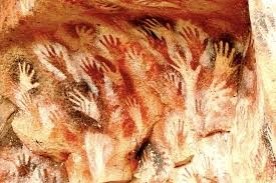 When trying to learn about the earliest civilizations, archeologists look to cave paintings as clues to what humans used to be like and how we have evolved. If you think about it, all of the writing in the world creates an entire body of work that represents our society’s evolution of thoughts, feelings, inventions, politics, culture, etc. I think a writer’s work from the time they are a child often does the same.
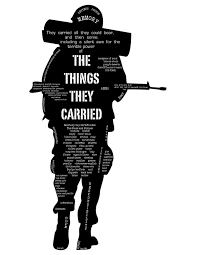 The first thing I was taught when I started writing was how to correctly use both diction and syntax to further the emotional response evoked from the reader. Emotion is something I really focus on when writing and I think it also gives me new ideas when I want to convey raw feelings. An author that I studied who is exceptional at this technique is Tim O’Brien, the author of
  elanlitmag.org