
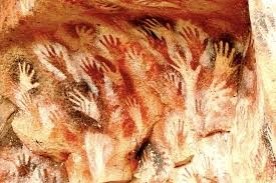
 When trying to learn about the earliest civilizations, archeologists look to cave paintings as clues to what humans used to be like and how we have evolved. If you think about it, all of the writing in the world creates an entire body of work that represents our society’s evolution of thoughts, feelings, inventions, politics, culture, etc. I think a writer’s work from the time they are a child often does the same.
The earliest poem I have a memory of goes like this, “I love whales painting there nails. They look so nice in there long tails. They are so younge they don’t like mails. And they love good sales.” Note the spelling of “there”, younge”, and “mails”. The second memory I have of writing was a narrative story in fourth grade about my dog Keiser that died when I was four. It was a very vivid moment for a young girl and it made its way into my writing a lot. There are obvious advancements in my writing like spelling, phrasing, diction, syntax, and imagery, but aside from that I don’t think the topics of my writing have changed a whole lot.
In my fiction, my pieces stem from my own life and personal truths that I need to explore through fiction in order to process and make sense of on my own. I still really enjoy writing things like creative non-fiction, so my piece about my dog Keiser isn’t that far off from something I would write now. It would be a lot more subtly tied to my life and it would of course be more descriptive and have more of an emotional arc and message, but the root would still be that it’s a story about my life that changed me in some way that I needed to express through my love of words. Death is something I often explore in my work. Religion and dealing with death and how those connect are something I struggle with processing and making sense of and writing it out through other characters is sometimes the easiest way to deal with it.
I recently wrote a fiction piece loosely tied to my extended family and all the issues we seem to have with each other. When first writing out the piece, I remained angry at that side of my family that was causing all this drama and didn’t feel the need to work to forgive them, but through the course of revising the piece, I grew to understand the characters I created as individual human beings that had made mistakes and were worthy of small acts of forgiveness. I didn’t have to let them in completely, but I could open myself up in slight amounts.
My poetry is also almost always rooted in my personal experiences. While I have no encounters with whales that I can truthfully write about, nature is something I often incorporate into my poetry. One of my favorite pieces I’ve written was a coming of age poem centered on how my family and I used to spend our free time going to the beach and hunting for sharks’ teeth.
If you were to line up all of my work from the time I was a child, you would see an illustration of my life up to this point. You would see my initial love of nature, particularly whales, then my first encounters with death, dealing with family issues, coming of age, and they will continue to follow my life from the big moments, like grieving, to the small moments, like just finding beauty in a creature. As a senior, I am moving towards college and deciding my future. I want to be a pediatric physical therapist and I only hope my writing will be able to follow me and illustrate the next stages of my life.
-Madison Dorsey, Community Engagement
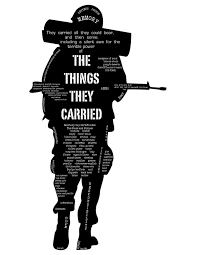 The first thing I was taught when I started writing was how to correctly use both diction and syntax to further the emotional response evoked from the reader. Emotion is something I really focus on when writing and I think it also gives me new ideas when I want to convey raw feelings. An author that I studied who is exceptional at this technique is Tim O’Brien, the author of
  elanlitmag.org