
Èlan Literary Magazine is celebrating its 30th year Anniversary. In honor of the evolution of our published writing, our editorial staff is appreciating the techniques and stylistic choices of those that have inspired them.
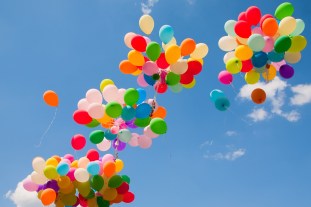
One of the first poems I ever read in middle school was “in Just-” by e.e. cummings, a poem about an odd little balloon man in a neighborhood during the height of Spring. We had someone read it aloud, the words smushed together, the spacing odd and confusing for students who had barely even read “standard” poetry. After the reader finished, everyone pounced on the writing: several comments like, “Doesn’t he know how to use punctuation?” and “This is stupid.” I had the same doubts; surely someone good enough to be in a middle school literature book knew how to construct basic lines and use proper grammar and punctuation. But it was the way “eddieandbill” looked on the page, the way they became one and the same as they ran down the street, chasing the balloon man. There was something purposeful in those conglomerations of words, something about the way cummings described spring – something more than a season.
In my own poetry – towards the end of my Junior year – I, too, began playing with form and grammar. In my final portfolio, I created a piece titled “Just a Pill,” a poem about my fear of medicine, stemming from having lived with my drug-addicted grandmother for the majority of my life. I began to understand just how meaningful floating language and improper grammar could be in conveying emotion; they weren’t just to make the poem look eccentric, or more modern. It was such a useful technique in what I wanted to create, lending a visual tension and pause to a piece that was otherwise gripping and forceful. Once I started writing things I valued, it became much easier to allow myself time to play with form. Just like e.e. cummings did in his balloon man poem, floating language and combined words took my writing to a place it couldn’t have gone in any other way; these choices shaped the pills into more than medicine, more than seeds of fear – suddenly the pills were an idea, a moment, a snapshot into a part of my life I didn’t want to re-examine.
Sitting in my seventh grade classroom puzzled by a man who would later become one of my favorite poets, I discovered something about writing: it doesn’t have to be perfect, or formal or anywhere close to “normal;” it just has to make you look at what you thought you already knew – how to write a line of poetry, how to interpret scary moments in your life. e.e. cummings was a man so dedicated to letters that he legally changed his name to all lowercase. He was a poet so dedicated to craft that he broke rules and created new ones. In the space between “far and wee,” the poem lives; in the closeness of “bettyanddisbel,” innocence is illuminated; in the “mud-luscious” world, the odd little balloon man delivers the essence of Spring.
-Mackenzie Steele, Co-Art Editor
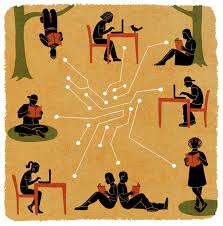 Our literary magazine, Elan has been around for 30 years, almost two of me. I imagine that through the years, with the many different staff members, editors, teachers, and readers, that this book has learned a few things. When I first came on staff and took on the position of Junior Poetry Editor, I went back through some of the older editions of Elan and tried to figure out how the editors before me picked the poems that would be in the book. I decided it wasn’t editors that picked apart poems and threw them in “yes” and “no” piles, it was the book that made the decisions. The essence and aesthetic of Elan showed me that we want poems that speak to the big and small, that can be read and understood immediately or others that need to be unpacked. It told me to look at where a poem takes my breath, where it makes me grimace, where it makes me want more, those are our poems.
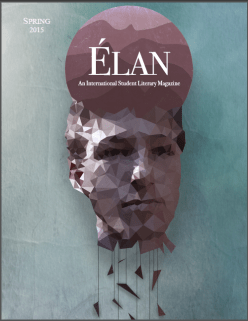 Before I joined the Élan Literary Magazine Staff I was a fan and a contributor. In my sophomore year of high school I was giddy to learn the publication accepted my creative nonfiction piece about my process of character development. The following year, my junior year, they published my poem about my revelation concerning my sexual identity.
 elanlitmag.org