I Write for Me

mackenzie-steeles-pictureUnlike many of my peers in the Creative Writing department, I have only been at Douglas Anderson for two years. Also unlike many of my peers, I didn’t attend Lavilla before applying to DA. However, I did write, and it was something that I held very dear to my heart.

I hadn’t seriously written anything creative for years when I started building my audition portfolio. The last time I sat down to write was probably fifth grade, and it was almost certainly a poem about some boy I liked, or something inspired by Edgar Allen Poe – long story short, it was crappy and weird and immature. But there’s value in those pieces, a small tinge of brightness amongst the darkness of the fifth grade psyche, I guess you could say. However, fifth grade wasn’t my earliest writing; instead, it was sort of a middle ground.

I grew up living with my grandparents and it wasn’t the greatest of arrangements. I had intense depression and anger issues and so I often found solace in colorful $5 journals that could be bought at Wal-Mart or Target. That was where I let myself go – I wrote hateful, yet situationally appropriate notes to my grandparents, sad little musings about missing my mother, video game cheats, little daily scorecards that I could go back and laugh at later. No matter what I wrote, it helped me get a decent way toward catharsis, and no matter the small steps I had taken, at least I had walked some on those days.

From here, I gained an intense interest in reading – fantasies like Harry Potter and Dragon Rider, books about dogs and princesses – basically anything I could get my hands on. And from this love of reading, a love of escaping real life, writing came around. In fifth grade I started reading Poe and writing those angst-ridden fifth grade poems, and then middle school hit, soon enough, and in seventh grade, the trajectory of my writing life changed. Our teacher signed us up to do an essay contest on Korean folktales. I ended up being chosen as one of 10 or so people to be submitted as finalists from our class. And while I didn’t win, I still remember thinking that, hey, maybe this is something I’m good at. Maybe I even like it a little bit. Maybe.

While these writings were often superficial, or too blunt to be read by someone else without the solid suggestion of therapy, they all were stepping stones in my road to DA. When I got to the writing program, I was still stuck in that stiff, “make yourself look good” mode of writing, especially in Junior Fiction – I had never really written fiction before, and I was no Christopher Paolini, so I was lost in a world of trying to fake it. But I didn’t make it until I started writing about my family again, writing about things that mattered. This growth happened hugely in Junior Poetry, where I began to be okay, once again, with being blunt and emotional. And so all of my writing since has been for me, which may be selfish, but as Laurie Ann Guerrero said, “I’m working through my [crap].”

-Mackenzie Steele, Co-Art Editor
The Craft of Nye

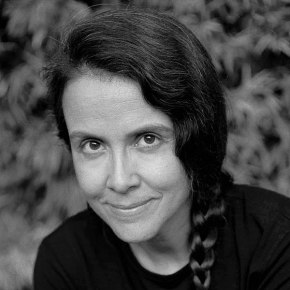
naomi-shibab-nye

When I first came to Douglas Anderson I swore I would never write poetry. How could I?  Poetry was constructed of line breaks, and choices. Like fiction these choices were made with intention, but with poetry the intention was a hard technique to learn, a hard technique to master. When I look back and think of what scared me most, was how raw poetry allowed one to be. Every word gave away a personal detail. It feared me to know that in a few stanzas people could know aspects of myself I never shared with anyone other than myself.

My junior year I wrote my first real poem, what deemed it real is I had to share it with others, yet I didn’t hide my emotion, the emotion I was always scared of sharing. Of course it was the cliché poem about the death of my grandmother. Later that year I had to recite a poem of my choice, and I chose Naomi Shihab Nye. A poet crafted in detail, and symbolism. Metaphors that brought me to the sands of the Middle East, every word counted.  What brought me to Nye was how she respectfully wrote about her heritage half American, half middle eastern. I always had a hard time writing about my half Albanian heritage. I felt as if I didn’t have a right to those topics, because it was only half of my identity.  The poem I recited my junior year was titled Blood, a commentary on war, and a narrative about how it affected her father, symbolism for how it affects us all.

“Years before, a girl knocked, 

wanted to see the Arab. 

I said we didn’t have one. 

After that, my father told me who he was, 

“Shihab”—“shooting star”— 

a good name, borrowed from the sky. 

Once I said, “When we die, we give it back?” 

He said that’s what a true Arab would say.”

Yet Nye  wrote about this in the perspective of herself  an American, who is so torn by what is happening, torn because even though she is an American they are still her people.

Nye is the reason I can write about my own father, about my own heritage, and also why I can write about being an American. Because what does the word American really mean? Who gets to fit that description? Nye has made me consider how every detail counts, how a title can convey much more than it seems, and that displaying a picture in someone’s head is a gift that not many can master. Nye is the reason I have never felt that when it came to my heritage I had to choose.  

-Mary Feimi, Co-Editor in Chief

A Thin Line between Poetry & Fiction

kiara-september-blog-post-pictureÈlan Literary Magazine is celebrating its 30th year Anniversary. In honor of the evolution of our published writing, our editorial staff is appreciating the techniques and stylistic choices of those that have inspired them. 

I am a writer that is constantly battling whether I see myself as a fiction writer or as a poet. I think that I do well in both aspects but there always seems to be the need to categorize myself. Recently I have found that both worlds are attainable through hybrid writing. I am really inspired by writers such as Jamaal May and Lee Ann Roripaugh. These are artists who tell their poetry through a narrative lens. One of my favorite pieces by Jamaal May is, “How to Get Your Gun Safely out of Your Mouth”.

The piece is a prose poem in which the examination of the retaining the will to live, to take a moment and breath. The poem takes you through a series of moments, and lists out the ideas to get the reader to take their time and consider the options to move forward. May uses second person perspective to his advantage in the poem, as he’s talking to the “you”, but he is also speaking of himself in the piece. I recently, tried to do this in my own poetry examining a similar pool of thought, and I wasn’t as successful with my endeavors, but I want to be able to speak to the reader and for myself.

Lee Ann Roripaugh, is able to take on a more personal approach and even creates an almost, folktale, storyteller vibe. The voices in her poem seem wise and the structure of her poems mimic this. The poetic elements tangle with that natural and ethereal voice which makes me feel that her own story is something I can always take to heart.

I believe I am drawn to prose poetry and poems that feel like stories because of their relatability aspect. Story telling is something all people have exposure to, and it makes a poem seem more accessible, and the visual style of a prose poem or hybrid piece always seems to be a journey. I am always interested in how visual structure can change the perspective. A reader can see the piece and dive in, and afterwards, feel in their chest that what they experienced was unique.


How to Get Your Guns Safely Out of Your Mouth by Jamaal May

Go ahead and squeeze, but not before you put on some tea,

clean two cups, lift shades and pin back curtains. Not before the end of this

song, before dawn reaches in, before you turn the page or a woman

apologizes for dialing the wrong man again—not before you learn her

name, how to pronounce it, how to sing it with and without regret

catching in your throat—Are you done? Go ahead and squeeze after

the hinges are reinforced on all doors, the house secure from storm or

intruder, your laces tied, this commercial break over, drywall taped,

spackled, painted—a nail driven, a painting hung and adjusted—

there is still so much to adjust, arrange, there is still time—and you

write your letter, correct every letter,

scrawl the signature so swift and

crooked it becomes the name of another—relax the

jaw that holds the barrel in place,

remove gun, point to heaven, and squeeze until the clip

is empty like the chamber.

-Kiara Ivey, Senior Layout & Design Editor