Exploring Poetry

marys-blogpost-picUntil my junior year of high school, I hadn’t given poetry a thought, or a chance. I decided that non fiction, was my first love, and felt it was my last. That’s the thing, I didn’t understand first loves, or last loves, and I’m not claiming I do now, but I do know that in order to love something, to love it hard, you, have to explore it, make the effort to understand it, and fully accept it for it’s truest form. Writing is no different.

I never expected poetry to so quickly grasp me in its arms, and shake some sense in to me. Before poetry I constantly doubted myself as a writer, I didn’t think I was deserving of that title. How did I know I was any good? Poetry on the other hand taught me, that its not always about being good; it’s about feeling. Non fiction allowed me to tell the truth, but only parts of the truth that I wanted to say, fiction allowed me to hide. I was surprised to find out that when writing a poem, every part of me fell on to the paper, and I didn’t know, until I was done, and there was no going back. Not only was I writing poetry, but I was exposed to so many great poets that year, Richard Blanco, Yusef Komunyakaa, Patricia Smith, Naomi Shihab Nye, just to name a few.  Exploring poetry, and realizing that every word counts, made me a better writer when it came to fiction, and non fiction. Thats what I mean, when saying that in order to love something you have to explore it, you have to understand the mechanics, and the rules, and the reasons.  Now I can’t imagine a life with out poetry. Poetry feels like writing in its purest form. Writing that can’t be harmed by too much emotion, and the slow meaningful process of revision. Poetry made me believe in humanity, and empathy more than I ever knew. Poetry is life through metaphors, too beautiful to ever be ugly, but powerful enough to hurt.

A writing prompt that I constantly go back to, is one recommended by Patricia Smith: imagine the  person you have had the hardest relationship with is dead, lying on a marble slab in an empty room. It is your job to dress them, describe each item of clothing that you place on their body, describe the room, describe what it feels like to touch that persons body. This prompt will bring up emotions, you may need to feel, and helped me let go of a lot of things I held on to. If you attempt this prompt, don’t over think it, just go with what you feel. You can always revise later, but you can’t revise words you never put down.

-Mary Feimi, Co-Editor in Chief

Pillow vs. Shelf Poetry

blog-post-picture

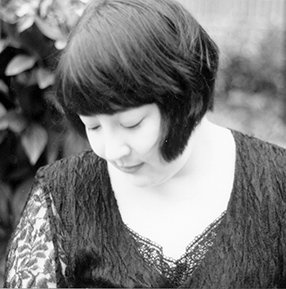
Poet Marilyn Chin

When I first started writing the only genre I enjoyed was Fiction. I liked making up stories and being placed in worlds greater then our own. I thought Poetry was what you see on
the back of milk cartons and what my sister hides under her pillows. Poems about romantic love and heartbreak, both of which I have yet to experience. I continuously tried to write “poems” but I always ended up gagging and throwing away the paper. I was afraid of poetry until I was shown the work of writers like Yusef Komunyakaa, Marilyn Chin, and Billy Collins, new writing that introduced me to words and images I had never thought of before. They also had different points of view and I really loved exploring each writer’s likes and dislikes. Reading some contemporary poets helped me understand that poetry is not only about love. After reading and realizing that it isn’t something to be afraid of, I started looking for more poets and wanting to learn more about the art form. The first poem I wrote is about Vesuvius and Pompeii and children being caught in the dark smoke. I think the idea was really original, but my execution sounded more like prose then poetry. What I had yet to learn was how to use poetic language.

Diction and the way it’s placed in poetry is something that I struggled with when I first
started. It was something entirely new that I had yet to experiment within my fiction. The
specific choices writers make with every word isn’t something I learned until I studied poetry. Poetry, although fiction does this too, relies on the word to give context to a specific meaning or tone that leads the reader into believing something that’s going on in the poem. With fiction the writer can rely on a lot more words and actual scenes. Having this type of structure forced upon me was extremely hard because I had yet to think that every single thing in the story can have meaning, even the placement of the word “they.” It taught me to go deeper into vivid details. For example, when someone is talking about a paper cut they’ll say, “This papercut stings.” But using more poetic structure would be “My papercut sizzles like it was placed on a stove.” Or something along those lines. Really thinking of how to describe something in a completely unique and descriptive way can give the reader a new view into the mind of the writer and the story. Without these combined genre techniques my imagery would not nearly be as well developed as it is today. What I challenge myself to do is to have an original idea and describe it in a way that no other would. Being different and not fully following the patterns is what I enjoy doing, so I’m hoping to move forward with my ideas.

-McKenzie Fox, Social Media Editor

A Bridge Between Genres

zacs-blogpost-pic

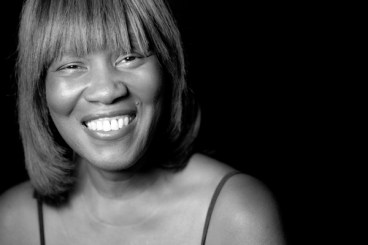
Writer Lee-Ann Roripaugh

Writer’s festival my junior year I had the wonderful honor of meeting poet Lee-Ann Roripaugh. I not only respected her for her commentary on culture and identity, but I had always admired her for her unique form that her poetry takes, specifically in her novel Dandarians. Dandarians is a unique poetry novel in that if you open it to certain pages you may believe that you’ve bought a novel of very short stories. This form that Roripaugh plays with is considered hybrid writing. Though her writing reads much like poetry in some lines, and even breaks in places as if it was a poem, she often sets up a very vivid setting and sometimes characters throughout the pieces. Though not all her pieces play with this form, Roripaugh is very familiar with it. In her workshop, Cracks: hybrid/mixed genre writing, she said something that particularly stuck with me; “hybrid writing bridges the gap between fiction and poetry, it allows for the two forms to exist in one plane.”

For me, a chronically narrative poet, I viewed this as a safe haven of sorts. I love poetry, I love the language of poetry and with work I can create this language, but too often do I find the need to create a concrete place and characters, so much to the point that it begins to sound like fiction. When I read some of Roripaugh’s work along with the examples she brought to the workshop, I connected with the form almost immediately. Hybrid writing allows for a writer to write with all the fluidity and language of a poet, even make the same stylistic choices like line breaks sometimes, but also lets you flesh our characters more, lets you maybe explain more than a regular free-verse poem might. Though I never personally used this form after I connected with it, I think back to it often and think of the possibilities it would afford me if I do ever choose to play with it.

An example of this writing can be seen in Roripaugh’s poem entitled “Skywriting.” The outward appearance of this poem is a piece of short fiction with very short paragraphs. But, if you were to read it, it is scattered with beautiful poetic language like “sometimes she coils herself up into a neat, tight spiral of pin curl,/and then, for a moment, she’s a moon-green yoyo…” This poem perfectly exemplifies hybrid writing because it does have poetic language as seen above but it also can be read as a narrative of sorts, following the narrative of a caterpillar, of all things.

Hybrid writing is not only a new emerging form that is beginning to get more recognition as edging the boundaries between genre’s, but is also a useful and unique tool for writers to experiment with their writing.

-Zac Carter, Art Editor