Poetry Intended

my bp picLately, all of my poetry has depended on prompts and lessons given in class. I think it’s good for a poet or just a writer to get their poetry from a classroom structure, but I also think too much structure can lead to less creativity. I’m guilty of not often taking time out of my personal day to write anything. But when I do find the time, I go to the bookshelf for inspiration. I only own a few poetry books. The one I go to most often is by Nikki Giovanni: “Black Feeling Black Talk Black Judgment.” What I find inspiring in this collection of poems is the speakers that Giovanni brings to light. They are some of the most unapologetic, emotionally vulnerable speakers I’ve ever seen in poetry. It’s something I think Giovanni has mastered in her poetry and I seek to create in my poetry as well.

I’m in Junior Poetry and we’ve learned about sound and meter and different forms of poetry such as ekphrastic and ars poetica. Understanding these elements of poetry causes me to look at it differently when I read and write. I can find different intents through the form on the surface or the sound beneath, underlying the contents of the poem. This inspires my poetry because it is the foundation for all poetry. I’m no Poe or Longfellow, I’m nowhere near to mastering these foundations, but I think it’s incredible the power that lies in the confines of poetry. It is one of the more compact forms of writing, but in that short time, short if you don’t count epic poetry, an entire story is delivered, narrator, conflict, resolution, or lack thereof, and the reader can make a connection, one I think can be even stronger than a full-length fiction piece.

What inspires me to write poetry most of all are experiences. When I’m lost for an idea, I go back in my mind and find a personal moment I can create a new speaker from. This can become overused as there are only so many prominent experiences one can access, but that’s another thing about being a writer. Experiences can be reshaped, seen through a different lens every time to create the freshest recounting. This also applies to experiences that aren’t personal, something I’ve seen on TV, in the news, or something I’ve watched someone else go through. I think these experiences are just as strong as personal ones and can create the most universality.

Lindsay Yarn, Creative Nonfiction/ Co-Web Editor
Odd Little Balloon Man

mackenzie-steele-september-picture

Èlan Literary Magazine is celebrating its 30th year Anniversary. In honor of the evolution of our published writing, our editorial staff is appreciating the techniques and stylistic choices of those that have inspired them. 

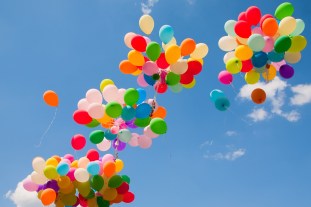
One of the first poems I ever read in middle school was “in Just-” by e.e. cummings, a poem about an odd little balloon man in a neighborhood during the height of Spring. We had someone read it aloud, the words smushed together, the spacing odd and confusing for students who had barely even read “standard” poetry. After the reader finished, everyone pounced on the writing: several comments like, “Doesn’t he know how to use punctuation?” and “This is stupid.” I had the same doubts; surely someone good enough to be in a middle school literature book knew how to construct basic lines and use proper grammar and punctuation. But it was the way “eddieandbill” looked on the page, the way they became one and the same as they ran down the street, chasing the balloon man. There was something purposeful in those conglomerations of words, something about the way cummings described spring – something more than a season.

In my own poetry – towards the end of my Junior year – I, too, began playing with form and grammar. In my final portfolio, I created a piece titled “Just a Pill,” a poem about my fear of medicine, stemming from having lived with my drug-addicted grandmother for the majority of my life. I began to understand just how meaningful floating language and improper grammar could be in conveying emotion; they weren’t just to make the poem look eccentric, or more modern. It was such a useful technique in what I wanted to create, lending a visual tension and pause to a piece that was otherwise gripping and forceful. Once I started writing things I valued, it became much easier to allow myself time to play with form. Just like e.e. cummings did in his balloon man poem, floating language and combined words took my writing to a place it couldn’t have gone in any other way; these choices shaped the pills into more than medicine, more than seeds of fear – suddenly the pills were an idea, a moment, a snapshot into a part of my life I didn’t want to re-examine.

Sitting in my seventh grade classroom puzzled by a man who would later become one of my favorite poets, I discovered something about writing: it doesn’t have to be perfect, or formal or anywhere close to “normal;” it just has to make you look at what you thought you already knew – how to write a line of poetry, how to interpret scary moments in your life. e.e. cummings was a man so dedicated to letters that he legally changed his name to all lowercase. He was a poet so dedicated to craft that he broke rules and created new ones. In the space between “far   and   wee,” the poem lives; in the closeness of “bettyanddisbel,” innocence is illuminated; in the “mud-luscious” world, the odd little balloon man delivers the essence of Spring.

-Mackenzie Steele, Co-Art Editor

I Go To Music

Rey BP pic 1In the beginning was the word. And that word was very heavy, full of life and anguish. The word was existence but also the end of being. The word carried nations and dropped kings with the same move. The word embodied imagination, making us gods over the realms that we produce. So, in the beginning of my creating process, of becoming the god to a world that may exist solely by my observation, I listen to music. It starts from a random rhythm. Either it pumps my pulse up, to meet its tempo, or it drags my heart beat down, to drown me in what it wants to convey. Either way, I go to music before placing finger to keyboard (because there’s no pen to paper nowadays).

I really can’t get into my writing without this overlaying, outside shroud that the harmonies become. I find the right song or playlist that carries the emotion that I need for the piece- whether it’s a raging rock album or soft, liquid dubstep mix. Then I follow the strongest feeling back to its home inside of me (usually in the gut area) and try to pull it out onto the page. I imagine the scenario and everything that is happening in order to mold the experience for everyone to feel. Either that or I know what emotional experience I want to convey already and I use the music as an enhancer to help myself become caught up in that emotion enough to find some kind of words to describe it. I never go in anticipating a masterpiece or a message to the world. I just go in wanting to say what I’m thinking or feeling. This allows me, for the most part, to get out whatever it is. After that, well that’s not the beginning. That’s the rising action and it varies by how I feel. For the most part though, I’m satisfied with myself for bringing this thing into existence.

-Rey Mullennix, Fiction Editor