
 Teri Grimm is a local writer, residing in Jacksonville, Florida, with her family. She received her BFA in poetry at the University of Omaha and her MFA at Vermont College. Grimm has two collections of poetry published as well as having her writing appear in other literary magazines, journals, and anthologies.
Personally, I was not all too acquainted with her writing before coming to Douglas Anderson and being introduced to her by the writing teachers. From the get go, the fact that she was a local writer made her more accessible to me because she was here in my town. She didn’t live in New York City or Chicago or in a remote cabin in the woods; she is where I am.
Out of the poems that I have read of hers, the one that has continued to stick with me is Magic Lantern. The progression of her images is so natural and the language is attainable. I don’t like to read poems where the language is so over my head that I don’t know what on earth is going on because it takes away any connection that I could have made with the work and the speaker of the poem itself. Grimm’s language allows for me delve into the poem itself.
Magic Lantern, specifically, poses philosophical ideas and questions of identity and the significance of life, but not in the way that is too overwhelming. The images themselves are grounded, so that the poem isn’t this abstract piece that I couldn’t grasp onto. Images like “he’d show glass slides of the Taj Mahal / or lovers kissing in a Venetian gondola. Familiar / scenes too and after flickering black and grey.” These are some of my favorite lines from this poem solely because I can see what the speaker is talking about. I can feel the awe of the Taj Mahal and I can feel the romance of the lovers kissing in a gondola. I am with the speaker.
How she ends this poem is what stayed with me the most. The poem is structured as a single longer stanza with long lines and then the ending line is on its own and is shorter than the rest. “But that was before I knew better.” Through the latter half of the poem, Grimm explores ideas of being this almost ethereal person and having this kind of light to her, so that “the world could see me better.” The language, again, is beautiful and captivating in itself, but the last line is what got me. It switches the speaker’s tone into something more reluctant and questioning of the world and themselves. Before the speaker is hopeful, maybe even a little jovial, but then the last line allows for the speaker to become someone more cautious and scared almost.
Grimm’s writing has allowed for myself to be okay with taking these turns that aren’t entirely expected because typically, I am careful with my writing, I am in my defined comfort zone. But with Grimm, she turns the poem, like all good poets, so that it isn’t what you expect.
Read Magic Lantern here: http://teriyoumansgrimm.com/poems.html
–Winne Blay, Junior Managing Editor
 From first glance, Jamal Parker is a very successful young writer. He has been champion to a number of poetry slams, worked as an editor in different publications, and is a Douglas Anderson graduate. A lot of his work, written and in the literary community, involves speaking through the perspective of being a Black man and pushing the achievements of Black people. I personally connect to this aspect of Parker as a writer, as I too often write about the being Black and what the Black experience is to me. Parker has judged for a poetry competition for the Campaign of Black Male Achievements and is a member of the Black Boy Fly collective, an artistic performance team.
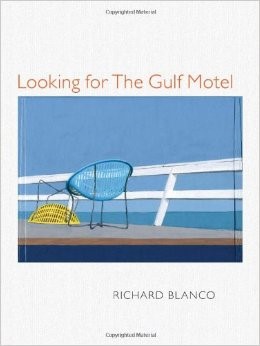 As I lay curled up in an armchair reading Richard Blanco’s third book Looking for the Gulf Motel, I was struck by his diversity and approach. In my personal life, when my writing suddenly shifted towards interactions with my father and references to Mexican culture- I housed a fear that I would be pigeon holed. Surely no one wanted to read ten poems all dealing with my father, and italicized Spanish words. However, words like chiles and tortilla popped up again and again, along with whole lines of dialogue in Spanish.
 elanlitmag.org