Switching Over

Seth's PictureI’ve always taken change in my life as signals for new beginnings. Just recently, I switched from Junior Poetry to Junior Fiction. At first, I was wary. How dare this get in the way of my poetry! Where shall I get my critiques and inspiration now? Ew, fiction.

At the beginning of junior year, I held the same mindset towards Junior Poetry. I thought, how dare this get in the way of my fiction! Where shall I get my inspiration now? Ew, poetry. You see, I ended sophomore year with poetry, and I wanted a chance to revisit fiction after half a year. I knew I was rusty with fiction, which is why I was eager to come back to it. To me, my poetry was fine enough. Oh, how wrong I was.

It took one day of Junior Poetry to revitalize me. One class period, one homework assignment, and one talented teacher for me to say, “Yes, poetry!” I was immersed. I shaped my poetry into a narrative style, and improved my skills on descriptive implication and developing speakers and settings. I gave and received critiques, and actually enjoyed the process. Lessons further tightened my grasp on poetic forms and structures, and I had plenty of opportunities to try out my brand new knowledge.

So of course, I came to my senses after a few minutes. Fiction will offer the same enlightenment that Junior Poetry did. I have an equally-talented teacher, and lessons which are just as useful waiting for me. Soon I’ll write fiction portfolios and develop my dialogue skills, and practice on interweaving setting, plot, and character. I’m ready to switch gears, but that doesn’t mean my poetic skills will languish for the rest of the year.

-Seth Gozar, Junior Fiction Editor
Beginnings and Endings

Jacob's PictureIt’s the beginning of the new year and that means we at Elan have begun our preparations for the Douglas Anderson Writers’ Festival. We’ve been collecting excerpts from our distinguished guest writers and posting these with their biographies on the Festival website, dawritersfest.com.
All of the reading I’ve been doing for the Festival excites me, as it does all of my peers, all of my teachers. Reading the work of a new writer is always exciting, but it’s even more exciting when you know that the writer is coming to your school and reading the same pieces to you, discussing how they were written and how you can write better. It reminds us that the Writers’ Festival is part of a great tradition that generations of Creative Writers have taken part in. Margaret Atwood, Joyce Carol-Oates, Billy Collins, and Richard Ford have all been keynote speakers in past festivals, and now we have the privilege to hear from more amazing writers.

For the first time in Festival history, we have two keynote speakers—the nationally recognized educator and novelist Ron Carlson and President Obama’s own inaugural poet, Richard Blanco. We’ve entered a new era of the Festival, where we’re big enough to expand the stage for speakers.

I am reaching the end of my time at DA, but I am able to be part of the Writers’ Festival this one time, and being part of its beginning is almost enough to make up for the pain of leaving it all behind.

-Jacob Dvorak, Senior Fiction Editor

Why I Read the Same Novels Over and Over Again as if That’s Normal

downloadMy mother cannot read the same book twice. She just can’t do it. She has made exceptions for franchises like Twilight and Hungry Games, but only as a refresher before she goes and sees the movies. She is constantly looking for new material to entertain her, new characters to meet and new plot lines to follow. I, on the other hand, can’t put a good book down.

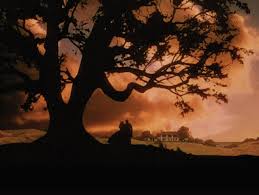
The first time that I read “Gone With the Wind” by Margaret Mitchell was in sixth grade. It’s 1,024 pages long and I finished it in a weekend. Since then, I’ve consistently read it again once or twice every year. Sometimes, when I’m having a bad day or am feeling entirely uninspired in my own writing, I’ll flip to the part where Rhett steals a horse for Scarlett, or where Frank Kennedy falls in love with a girl dressed in drapes as if that’s where I’d left off, and read on from there.

I’m not a fiction writer. I write fiction, sometimes, but it’s not how I identify. I am, however, a fiction reader. I love analyzing the same plot line over and over again; I love crying when my favorite character dies or losses love all  over again. I enjoy it just as much as I enjoy finding new literature to read.

I think, in part, it’s because I understand how much a writer has to go through to create something like this. To write a novel, or even a poem or a short story, a writer has to know their characters fully. We don’t usually make things up as we go along. We usually plan things out, we think about who our characters are; we think about how and why these things are happening to them. To a writer, their characters are real people. So to me, when I read about them, these characters are real people too.

The best part of writing is that it encapsulates humanity. I think that I read the same novels again and again because I can relate to them, even if the story does take place in Georgia during the Civil War or in a constant loop of reincarnation. I see myself in the characters and in the lessons they learn. I want to see their triumphs, to laugh at the funny things that happen in their lives and even to relive their heartbreak. Novels remind me that everything ends, but also that everything can begin again. It’s kind of hopeful. And so, I can’t ever really move on from a story that truly touches me.

Do you have any novels like that?

-Savannah Thanscheidt, Web Editor