
 My first experience with Elan was in freshman year, when I was forced to submit my first fiction portfolio for a homework grade. The story was about some kid and how he related his father to parachutes, throughout different stages of his life. Shockingly, it was titled “Parachutes.” You can read it on page 44 of Elan: Winter 2013, located on the archives page of the Elan Literary Magazine website at https://elanlitmag.org/archives/.
From that point on, there were three reasons that I fell in love with Elan:
- Elan Literary Magazine was a professional publication run within my own department.
- Students led the masthead of Elan.
- My work was about to be published for the first time!
I looked up to Elan so much that I had neck pain. My hope for junior year was that I would become a part of the staff, so that I could also assist in the spread of literary publishing breakthroughs for other kids like myself, who started off without any hope of getting published.
And so, the dream has become reality. Bam. I’m here.
Oftentimes, reality can be described as a letdown.
With Elan, that statement is entirely false.
Being able to play a part in the group that led to what I consider to be my first and ultimately most important achievement as a writer means the world to me because I am able to contribute to impacting other kids the same way Elan impacted me. Most importantly, I am far from the only person who feels this way about Elan. Thirty years of children with writing and hopes for their work laid the road to where we are now. Thirty years of work have ultimately culminated into where the publication stands today, as both an online and printed work of literature.
And the most beautiful thing about the publication is that it continues to inspire me in new ways. For example, the recently-held Elan 30th Anniversary Alumni Reading brought together a few writers who were published in Elan during their time at Douglas Anderson in order to show where those writers stand today. Some of the writers pursued professions having to do with writing while others took more academically-based paths. Some of them admitted to giving up writing at some point in their lives. However, all of them still considered themselves to be writers because they all returned or stayed with the art, with Elan as the starting point to their explorations of the art form. Seeing those people made me, for the first time, truly see the importance of Elan as a legacy, and how much those thirty years of dedication have made an impact on the writers of my department, whether they are currently enrolled or left the school twenty years ago.
And so, my definition of Elan has evolved. Whereas when I was a freshman I only saw Elan as a publication, I now view it as an inspiration.
-Logan Monds, Social Media Editor
 In light of the Douglas Anderson Writer’s Festival approaching within the next month, I decided to take time to get to know some of the featured authors before working with them. Janice Eidus in particular stood out to me. She specializes in fiction, but has also written essays. In The Wanderer, an essay published in the New York Times that deeply explores the directions her life has gone up until now, she illustrates how shifts in her environment from her youth into adulthood fluidly, unraveled the milestones in her life and sparked endless imagination of her future, which continued beyond the end of the essay, off the page—as all of our stories do. Even before plunging alongside her into this moving world of crumbling staircases, alcoves, and music on rooftops, when I felt I knew her at least on the surface as an “honorary Jewish Puertorriqueña,” I found her fascinating. She was raised in the Gun Hill projects of the northeast Bronx, where she and her friends devoted themselves to the promise of an education, as well as the toughness of the streets. After college, she sought the Bohemian lifestyle which would infatuate her for years to come.
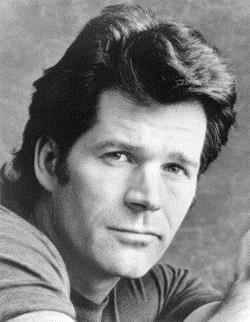 When I first ordered The Cage Keeper by Andre Dubus III, I wasn’t expecting what appeared on the first page. With a title such as this one, I expected the book to be a linear set of stories about human trials and tribulation. The book opens with a short story called “The Cage Keeper,” which I assumed would be a tale of finding a heart for criminals who were misinterpreted and prejudged. However, I was taken for a complex journey encompassing human interaction, violence, sorrow, loneliness, and desire.
 elanlitmag.org