30th Anniversary Alumni Appreciation: Jenn Carter

Èlan Literary Magazine is celebrating its 30th Anniversary. In honor of our longevity we are posting work from our editorial staff alumnus, which includes biographies, Q&A’s, and excerpts of their pieces.
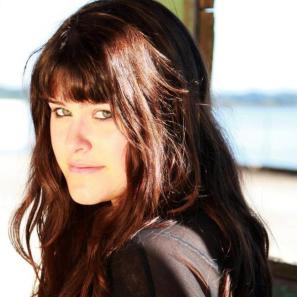
Jennifer Carter Blog Post PictureJenn Carter graduated from Douglas Anderson School of the Arts in 2013. She is currently a double major in Theater and Creative Writing at Florida State University and will be graduating Summer 2016. Her play Missouri Hymns opens as a part of FSU School of Theater’s original works festival New Horizons this spring. This play stages poetry in a unique immersive theatrical experience. After graduating she plans on continuing to research how poetry blends and transforms when paired with other artistic mediums, especially theater. She awaits to hear back from many MFA programs, and has currently been accepted into Episcopal Service Corp in Washington, DC.

How did your experience at DA influence your current artistic development?

It gave me the discipline to endure as an artist in the collegiate world. It gave me a home to fondly look back on, and gave me the strength to continue writing.


Trailer Park Aubade

 (From Èlan 2013)

Last night

your smile has a yellow haze of

“good old days”,

the sunset over the drugstore

making out by

the dumpster, our initials

scrawled on the belly of a metal beast

fed on

empty beer cans.


This morning

Stevie lyrics

bring back memories beneath

barnyard cobwebs.

A slow dance to the hum

of moths orbiting florescent

moons.


You touch my hair,

nibble my ear and I

I shake you off

an indefinite hangover.


We stare out the window.

A series of white trailers stand

at attention like rusted

submarines, and you salute

then with your naked frame.


A pink tricycle wheel

still spins.

A mutt chews

Last night’s take out.

A patriotic bird house

with chipped paint

is vacant.


Poet’s Drive

(Performed at the Èlan 30th Anniversary Alumni Reading)

Anne Sexton says it only matters
how I remember him. The man
he actually was is irrelevant.
Sexton curls her knees to her chest
and reads Stanislavsky.
She drives down Tennessee Street,
a dream catcher and a rosary hanging
from her rear view mirror. I drive
by her in a 1987 Ford Ranger
we miss each other in our hurried passing.

I’m in a chapel cleaning windows.
He asks me how many windows I cleaned.
I mumble about the pollen.
He doesn’t know about all the poets
driving around in this town.
How we call each other late at night
from the cold side of our pillows.
Instead on the couch he tells me
my poetry is my music.

He doesn’t know Anne Sexton
is a method actor at the podium.
She says by the time she is at the last line
of her work she is a naked woman.
Her voice becomes small and exposed.

I drive away from his house
blasting my actual music
so the last pieces of me
can bleed into his life
as he closes the front door.


I roll down the windows
open the sun roof at night
pretend there is a texture
to the air in this town.
There is mystery in this
fluorescent neighborhood.

I park my car outside
my apartment. Anne is writing


from my third floor bedroom.
She is writing my shadow
against a dimly lit ballad.

I am on repeat driving him home,
watching him slide out of the car
almost always pulling him back.

What do you wish someone had told you about the experience of being a creative writer at DA when you were a student? (Think about things you wish you’d appreciated more when you were here that you now realize brought you value).

My teachers always said, “Never again will you have a community quite like this,” and they were right. And I have been a creative writing major at FSU. I hope to be in a poetry MFA program one day. But I was writing with my peers at DA (most of them) since I was eleven. We were learning to read, and write- we were forming what language and art meant to us for literally the first time. And realizing that is key, but something that doesn’t come fully until you have the perspective of leaving.
Writer’s Fest: Guide to Making It

Tatiana Blog PictureEvery year, as hundreds of people flock to Douglas Anderson’s Writers’ Festival, writers and fans alike ask themselves the same question: How can I possibly see it all?
The answer, unfortunately, is simple — you can’t.

But part of the magic of these festivals is just that, and the pressure of choosing between two great workshops forces festival-goers to make the most out of what they’re allotted. At any given time, there will be four or more workshops covering a range of topics like developing intention, setting, humor, and more. With all the options available, it’s no surprise attendees new to the event’s structure are left at a loss for how to manage their time. What it comes down to really depends on what you’re there for. Often students flip through the pamphlet, find the workshops best tailored to what they struggle with in their own writing and go there. Getting that focused time to craft that skill is often one of the most valued elements of every good convention, and Writers’ Fest is no different.

But even the most prestigious, seasoned writers enjoy writing conferences like Writers’ Fest, the AWP, and Dodge Poetry Festival because they allow for exploration and communication between creators. These writers may no longer need to hear tips on forging plot but it’s the collaboration of each writer’s process, the proximity to other creative-thinkers that draws the most out of everyone that attends. I went to my first Writers’ Fest as an over-eager sophomore just beginning to grasp the basics of the craft, so I attended lectures work shopping style, plot, and characterization. Now, I’m a senior with a clearer grasp on those things, but now as I’m figuring out how my voice should sound from the page, I’ll be at the workshops that encourage exploration of theme and identity. Whatever your goal is, following these general rules will help you get the most out of your Writers’ Fest experience:

  • RESEARCH. I skipped this step as a sophomore, and as a result missed out on incredible workshops with Dorianne Laux and Patricia Smith, two of my favorite poets now. Learn from my mistakes. You can find a complete list of the authors on the DA Writers’ Fest website along with bios and samples of their work. Mark where you feel a connection.
  • REFLECT & DECIDE. Think about where you are in your journey as a writer (or reader). What lessons can you benefit the most from learning? Taking into account your immediate goals and desires, compile a list of techniques you find yourself stuck or struggling in.
  • COMPARE. If you’re lucky, the authors you were drawn to will have workshops that tie into what skills you want to develop (a list of author workshops is also on the DA website). If not, try to leverage your desires as a fan with your needs as a writer. Make a decision and stick to it.

OTHER TIPS BASED ON MY MISTAKES:

**Do not be afraid to attend a lecture alone! I missed the aforementioned Dorianne Laux workshops for a lecture my friend wanted to attend. I still had fun, but I walked away from it knowing I couldn’t apply what the workshop sought to teach. Similarly, if two lectures you and your friend want to attend are scheduled to happen at the same time, don’t hesitate to split ways, attend both, and compare notes later. Bottom line, working together can make or break your Writers’ Fest experience.

**Writers need to make a living, too! If you meet a writer you really connect with, don’t hesitate to buy their book. Douglas Anderson will have a small store featuring all the writers’ collected publication for sale. They’ll sign it!

**While I can’t speak for all our writers, most of their lectures will not involve sitting around a table helping you hammer out your third draft. Instead, bring a blank journal and pen and try something new. Take good notes!

**Don’t freak out if you can’t attend every workshop on your list. Plans change; workshops get moved around, etc. Just remember to breathe and know that you’ll probably get another chance to see/hear/learn from them soon. After all, it’s supposed to be fun!

-Tatiana Saleh, Community Editor

Transplanting

Zarra Blog Post PictureI am not someone who tends to be particularly taken by imagery in poetry. Most of the time I am excited by narrative, powerful connections, and precise word choice. Lee Ann Roripaugh does all of these, but she also has a very specific hand at crafting images that are as moving as they are beautiful. I was not expecting to be so empowered by her words, but I find myself in awe of her construction of story and description.

I had not heard of Lee Ann Roripaugh until I read her bio on the Douglas Anderson’s Writer’s Fest website.  I was not surprised to discover someone new who I loved through Writer’s Fest—the same happened to me my freshman year for several authors (Rick Moody, Dorianne Laux, Patricia Smith, etc.). But I am not someone who typically reads poetry for fun. It is not because I don’t enjoy poetry, but because I am not driven to consume it in the way I am driven to read fiction or nonfiction. Lee Ann Roripaugh changed that for me.

Her poem, Transplanting, completely surprised me not only in its construction but in the way her images pushed me through the poem. The numbered sections were effective in the way they fit perfectly into the construction and her descriptions of her mother spoke to my own experiences (though not with the same event). I am incredibly excited to meet Lee Ann Roripaugh, but even more excited to learn from her workshop.

-Zarra Marlowe, Junior Submissions Editor