
 Èlan Literary Magazine is celebrating its 30th Anniversary. In honor of our longevity we are posting work from our editorial staff alumnus, which includes biographies, Q&A’s, and excerpts of their pieces.
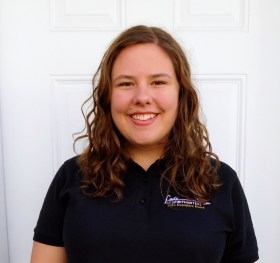
After graduating from Douglas Anderson in 2014, Emily Cramer moved to Tallahassee to attend Florida State University, where she is studying Nursing. She is a member of the Honors Student Association and has been on the Dean’s List for the past three semesters. She is currently serving as Secretary on the Executive Board of Lady Spirithunters, a spirit-based organization that works closely with the Florida State Athletic Department to spread love of FSU to the Tallahassee community and other FSU students.
| Cherokee Land, 1830
(From Èlan 2014) We found a maimed wolf this morning, caught in the chicken wire. Pa called for my brother to fetch the rifle. When he passed he brushed my shoulder, whispering of footsteps words spoken in a tongue we could not understand.
Sometimes at night, when Pa slept off his fingers of whiskey and twigs snapped beyond our windows, Ma told us stories of man and wolf melding into one, sun thrumming through veins. She told us how we pushed into their land, built on their earth. She told us of a brotherhood painted on hills, feathers sticking to stone to form figures, histories hung from lips lit by fire.
My brother returned with the rifle. Pa hawked up spit and sent it into the wolf’s face. He told us to watch, learn what happens when savages enter our land, take from our mouths.
|
Dear Harper
(Performed at the Èlan 30th Anniversary Alumni Reading) Between your ink-blot pages I found the cul-de-sac at the end of our street, where my brother and I raced bicycles round and around and around, until we stumbled home, dizzy with grins and sun. In Scout, I discovered my mother, mirror image younger sister, scabbed knees, undending curiosity and stubbornness, a kindness sunken into her very being. Within your letter fragments I unearthed the history of the soil I buried by toes in, from sun rays dappling leaves in the park down the street, to dark boughs bending over, cries ringing through the wood.
But in Atticus, dear Mr. Finch, I found the father I had only dreamt of, a father who would take my hand and explain justice in a way I understood, a father who would hang on my every word, who treated me like my mind was made of gold.
Somewhere, a mockingbird begins to sing, and two children run through a wood, their father following with a smile.
|
What lesson did you learn at DA that sticks with you still? (Not just a lesson in the classroom but a larger lesson that gives perspective to your current life)
In junior and senior year, I really began to understand that fiction and poetry are not completely separate genres. In my last two years at DA, I began experimenting with using fictional storytelling techniques in my poetry, and using poetic language in my fiction. Some stories need to be written in a fictional format, and others need to be poems. At DA, with the help of [my instructors], I learned how to merge genres and write stories the way I needed and they needed to be told.
 As we close in on Élan’s 30th consecutive year in publication, it’s important to remind ourselves why we’ve made it this far and why we’ll continue to publish in the future. So often, young writers are marginalized by their age, lack of experience, societal status, and perceived lack of skill. Most “big” publications skim over these authors, mistaking those qualities for an inability to craft a compelling story full of depth and growth.
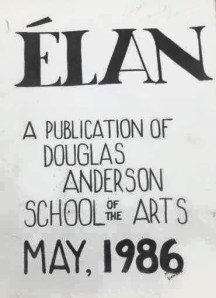 When working within a publication with as long a history as Élan, it’s easy to forget how complicated and interwoven tradition is. For 30 years, this magazine has collected and judged student writing and art under the supervision of teachers and students. There have been dozens of print issues, ranging from handwritten construction-paper projects to typewriter printouts, from small wads of paper custom-printed for Extravaganza to professionally produced full-color journals. Hundreds of staff members have worked on the magazine, and thousands of authors have given their work to the custody of the advisors, the editors, and the staff members of Élan.
 elanlitmag.org