
 It’s more than a little painful to read my old work, and by old, I mean both the stuff I wrote four years ago and what I wrote four days ago. It’s a constant process of asking, “What in God’s name was I thinking?” and having no response. And while this process does cause me to cringe, it also allows me to see how much I’ve moved forward in my work, how far I’ve come and how much further I can go.
The general style of my writing has actually remained the same; I have always stayed simplistic in diction, but gotten caught up in the images of what I describe, almost like I’m writing poetry into my fiction. I think the stagnancy behind this is because that’s just the way that I write. I can alter this style after I bust out a first draft, but, to me, a story always starts out bare, aside from its visual aspects. I will admit that a great shift within my writing is that I have gained the ability to shed excessive images that mean nothing in terms of intention, though I still catch myself slipping up sometimes.
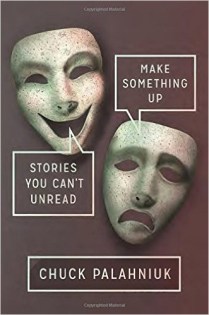
Probably the most significant change that I’ve found within my writing is that, in the midst of last year, I decided to start writing weird things. People tell you to write what you know because otherwise you’re stuck with conjecture. From my experience, that advice is total crap. I took familiar subjects and shoved them into strange situations: a girl stranded with her recently introduced half-brother in a desert, a boy stumbling across a body on a golf course, a how-to guide on communication with lost loved ones. One of my major influences in writing all this partial-nonsense comes from the book Stories You Can’t Unread by Chuck Palahniuk, the author of Fight Club. The former is a collection of short stories that are completely submerged in the strange and surreal, and within these weird circumstances, I found that I was entirely interested in what the speakers had to say. I wanted to translate this interest to my own writing, so I started the process of delving into the wild, stuff that I plain hadn’t seen written before. For example, everyone has read a story about a failing marriage, but what about a failing marriage following an accident in which the wife was struck by lightning?
Through this type of exploration, I found myself more intrigued and interested in what each story has to offer; once I was hooked in writing the story and had a healthy interest in its direction, the readers also tended to gain more of an interest. I realized that I had to care about what I wrote in order for anyone else to care. So, my ultimate advice for that story that is lurking in a file somewhere, beaten down to the bones, is to make yourself interested in it again. Introduce a sick dog into the mix. Throw some aliens in. Have fun!
-Logan Monds, Social Media Editor
 Unlike many of my peers in the Creative Writing department, I have only been at Douglas Anderson for two years. Also unlike many of my peers, I didn’t attend Lavilla before applying to DA. However, I did write, and it was something that I held very dear to my heart.
 The earliest thing I remember writing and feeling distinctly attached to was a haiku I had written in the third grade about a panda that knits. Our class was learning about Japanese culture and each day of the week was revolving around some different aspect of the culture (food, kanji, etc). This was the first time I thoughtfully created a piece. I mean, I was in the first grade, and the subject matter wasn’t of course complex or earth shattering but I remember feeling good fitting into the syllable count, clapping out the sounds, and digging into my brain for the right words.
 elanlitmag.org