
Olivia Ragan attends Denver School of the Arts in Denver, Colorado.
Currently, what role does art play in your life?
Currently, I read just as much as I write – I find that writer’s block comes far more often when I don’t read. I also listen to music frequently, especially when I am writing. As for my own art, even if I don’t pursue writing as a career, I think I will write for the rest of my life. I’ve been writing for years now and it has helped me through . Writing is my favorite outlet for stress and creative energy.
What was your inspiration for your winning piece?
When I wrote this piece, it was raining outside, and I was thinking of all the unfinished knitting/sewing projects my grandmother has. This was about the same time that the e key came off of the keyboard of the computer I use at school. The weather is a huge source of inspiration for me, and I write a lot about seasons when the weather starts to noticeably change. I especially love the transition from winter to spring, and that inspires a lot of writing I do. The rain and the computer and my grandmother’s knitting combined in my head as I listened to music by Regina Spektor, leading me to write this poem.
What is your process for creating art?
I write to prompts or to workshops I receive in class, or I write while listening to music on my own. After the rough draft of a piece is complete, I don’t look at the piece for a week or so and return to it with fresh eyes. I usually edit a piece two or three times before showing it to anybody. If I am dedicated to a piece and still unsatisfied, I send it to a friend of mine and they critique it. I edit it a final time with their suggestions. I didn’t have anybody else critique this piece before I submitted it to Élan.
Do you have any tips for budding artists?
Well, inspiration can really come from anywhere. And when an idea comes, it is best to write everything out while you can, or write the idea down if you can’t so you won’t forget. It is also really important to read. If you want to write poetry, read good poetry, and it will make the writing process much smoother.
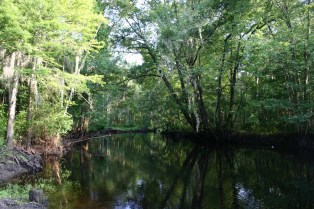 The swamps of Florida. The snaking rivers of South Carolina. The jagged, clustered crannies of Appalachia. The humid pine smell of New Hampshire. When I think back on my experiences, I remember less the moods of the people, or the taste of food we ate, compared to the places I inhabited, even briefly. It’s hard to describe how much the natural world relates to my writing. I became obsessed with the crazy logic of ecology after spending a summer week kayaking, studying the sand banks, the deer tracks, the slick growth on river rocks, the schools of fish darting beneath my paddle, the patches of kelp knitting a dense forest in the toughest currents. My brain, six or seven hours a day without technology or books or conversation, took in every detail, and began to notice how quietly, but profoundly every passing molecule could be traced to every organism in those rivers. The pockets of moisture trapped in rocks as the levels lowered were just as essential to what I saw as the current of the water.
 elanlitmag.org