“Poetry is language at its most distilled and most beautiful.”

“Poetry is language at its most distilled and most beautiful.” -Rita Dove

For much of the Élan staff, Poetry is more than just a reading genre; it is more than just a subject in school. It is expressing the inexpressible, finding the humanity and in humanity of things; it is the sharing of our most intimate parts and pieces.

April is National Poetry Month, and in the interest of getting right to the point: we couldn’t be more excited. To kick off the celebration, we as a staff have compiled a list of some of our favorite poems.

Click the title to read the rest of the piece.

By Gwendolyn Brooks

I’ve stayed in the front yard all my life.
I want a peek at the back
Where it’s rough and untended and hungry weed grows.
A girl gets sick of a rose.
By Major Jackson
It doesn’t matter if you can’t see
Steve’s 1985 Corvette: Turquoise-colored,
Plush purple seats, gold-trimmed
Rims that make little stars in your eyes
By Jack Gilbert
Everyone forgets that Icarus also flew.
It’s the same when love comes to an end,
or the marriage fails and people say
they knew it was a mistake, that everybody
said it would never work.
 By Jack Gilbert
The fox pushes softly, blindly through me at night,
between the liver and the stomach. Comes to the heart
and hesitates. Considers and then goes around it.
Trying to escape the mildness of our violent world.

I Remember You As You Were

I remember you as you were in the last autumn.
You were the grey beret and the still heart.
In your eyes the flames of the twilight fought on.
And the leaves fell in the water of your soul.
We don’t see the ocean, not ever, but in July and August
when the worst heat seems to rise from the hard clay
of this valley, you could be walking through a fig orchard
when suddenly the wind cools and for a moment
you get a whiff of salt, and in that moment you can almost
believe something is waiting beyond the Pacheco Pass,
something massive, irrational, and so powerful even
the mountains that rise east of here have no word for it.
Praise the restless beds
Praise the beds that do not adjust
     that won’t lift the head to feed
     or lower for shots
     or blood
     or raise to watch the tinny TV
Last night I found my face below
the water in my cupped hands.
The mask made of copper and bone
criss-crossing to make a smirk,
 

Medusa

Off that landspit of stony mouth-plugs,
Eyes rolled by white sticks,
Ears cupping the sea’s incoherences,
You house your unnerving head—God-ball,
Lens of mercies,

Why I Read the Same Novels Over and Over Again as if That’s Normal

downloadMy mother cannot read the same book twice. She just can’t do it. She has made exceptions for franchises like Twilight and Hungry Games, but only as a refresher before she goes and sees the movies. She is constantly looking for new material to entertain her, new characters to meet and new plot lines to follow. I, on the other hand, can’t put a good book down.

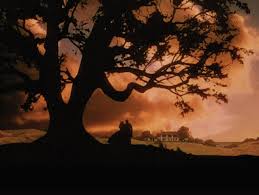
The first time that I read “Gone With the Wind” by Margaret Mitchell was in sixth grade. It’s 1,024 pages long and I finished it in a weekend. Since then, I’ve consistently read it again once or twice every year. Sometimes, when I’m having a bad day or am feeling entirely uninspired in my own writing, I’ll flip to the part where Rhett steals a horse for Scarlett, or where Frank Kennedy falls in love with a girl dressed in drapes as if that’s where I’d left off, and read on from there.

I’m not a fiction writer. I write fiction, sometimes, but it’s not how I identify. I am, however, a fiction reader. I love analyzing the same plot line over and over again; I love crying when my favorite character dies or losses love all  over again. I enjoy it just as much as I enjoy finding new literature to read.

I think, in part, it’s because I understand how much a writer has to go through to create something like this. To write a novel, or even a poem or a short story, a writer has to know their characters fully. We don’t usually make things up as we go along. We usually plan things out, we think about who our characters are; we think about how and why these things are happening to them. To a writer, their characters are real people. So to me, when I read about them, these characters are real people too.

The best part of writing is that it encapsulates humanity. I think that I read the same novels again and again because I can relate to them, even if the story does take place in Georgia during the Civil War or in a constant loop of reincarnation. I see myself in the characters and in the lessons they learn. I want to see their triumphs, to laugh at the funny things that happen in their lives and even to relive their heartbreak. Novels remind me that everything ends, but also that everything can begin again. It’s kind of hopeful. And so, I can’t ever really move on from a story that truly touches me.

Do you have any novels like that?

-Savannah Thanscheidt, Web Editor 

Fiction as Told By a Poet

Beautiful-Pool-with-Exotic-ViewThis year’s transition of genres was especially hard. Last year, I hardly noticed.  Moving from fiction into poetry was a prize at the end of the road. Junior year’s second semester opened the door for my voice. A voice, that in the first semester, I didn’t even know was there. And this year, I felt the hinges break off. Of course, beginning with the immersion of poetry gave me a taste I wasn’t ready to let go come January. I was scared that all of the progress I made in poetry would fall excruciatingly short in comparison to fiction.

I am unbelievably happy that I was wrong.

All that I’ve learned in since January has truly surprised me. And it hasn’t all been in the classroom either. Before this year, ideas for stories never came to mind like poems did. Whenever I go out now, I find a character in unintentional eavesdropping, a setting at a stop light, and conflict everywhere I turn. The pages in my journal now hold something other than line breaks.

Fiction, dare I say it, is beginning to feel natural.

The way I see it, poetry is a well leading to an underground reservoir. Each line plunges you farther and farther to the source, the intention, the purpose of the piece. Fiction, on the other hand, is an in-ground pool. Its depths and shallows are chosen very specifically. There’s room to swim around—even a patio to socialize and sunbathe. Fiction allows you to take your time. But in any sense, lazily. This room promotes emotional investment that poetry’s brevity sometimes prohibits.

Fiction is a second home that always reminds me of my first. The childhood house that felt like a fortress to get lost inside. Fiction is not wanting to find my way out.

-Mariah Abshire, Editor-in-Chief