
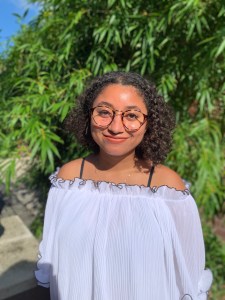
 This year, I am one of the senior Layout and Design editors for Élan. My responsibilities have changed since the year before, and I’m excited to grow into this role. Élan is a beautiful magazine that allows teen writing and art to live in one place; I know that showcasing teenager’s passion, and talent is extremely important for the literary/art community to see. Young artists need to be acknowledged, and Élan does that. I have always been proud of what I do at Élan, but considering that this is my senior year, and I’m a mentor, I feel more joy and pride. My responsibility is to pass down my editorial knowledge to my junior counterpart, but I also want to pass down my love for Élan. It is exciting to see a “new generation” of staff members, and seeing Élan grow and evolve.
Submitting to Élan is a chance to tell the world that you are here. Élan has always been special to me; this international literary magazine is made by students, for students, and to me that is a wonderful thing. The Élan staff is supporting other students, other young artists, and we are giving these teens a voice. For so long teenagers have been silenced in plenty of different spaces, and the literary and arts community have sadly been one of them. It is extremely important to have Élan as a place that allows teens to express themselves in the truest ways possible.
As a writer, I’m inspired by all the new pieces that are submitted for our issues; it is amazing how so many different types of people can express themselves through such creative writing and art pieces. From junior year to senior year, my personal growth as a writer can be contributed to reading. Reading poetry books at home, reading short stories, reading submissions to Élan. I get excited when Élan opens their submissions because it is a unique chance to read and select works from teens who are just as dedicated to their art as I am. Personally, I try to put my all into my writing, and it shows that these artists do as well; it’s crazy how so many young artists create with so much life inside of them. I have always struggled with being honest with myself on the page, and truly expressing anything; last year, I had to get comfortable with being vulnerable with myself and others. I had many places that I felt like I could go out of my shell, but Élan showed me that there are other teenagers around the world who are also putting themselves out there, and that it’s okay. I had real life examples of young writers being vulnerable and true; I grew with my writing during my junior year, and I had the space to allow me to do so, for that I am forever grateful for Élan.
– Luz Mañunga, Senior Layout and Design
 As a layout and design editor, my position is valuable editorially because it helps make every decision of the group tangible. The staff could accept and pair each individual piece of writing and art, yet without the role of layout and design being filled, their visions would never become complete visual representations. Creating each issue is obviously an important part of my role on Élan, but layout and design has a hand in many other aspects of the magazine world as well.
 Élan in its final form–the beautiful, glossy print book chock-full of unique, brilliant art and writing–is, in truth, the realization of a dream rooted in a 30+ year legacy of publication. Every year, through the power of collaboration and teamwork, we somehow manage to spin a book out of thin air. Of course, this takes a lot of care and foresight that may seem difficult or obtuse in the moment, but every inflection in the process ends up visible in the final product.
 elanlitmag.org